Although Tajikistan has adopted comprehensive reproductive health policies and made significant progress in institutional deliveries and skilled birth attendance, important disparities in access and utilization persist. For many women, girls and marginalized communities, policy commitments have not yet translated into care that is affordable, accessible, confidential and free from discrimination.
Tajikistan’s sexual and reproductive health and rights landscape is defined by a persistent gap between policy commitments and lived reality. The country has adopted a National Reproductive Health Programme for 2023–2027 and incorporated reproductive health, maternal health and family planning into its broader health-sector strategies. However, implementation remains constrained by insufficient financing, geographic inequalities, weaknesses in primary health care, discriminatory gender norms and the limited decision-making power of women and girls.
These challenges are particularly acute in rural and mountainous areas, where distance, transport costs, shortages of specialists and uneven service quality can delay or prevent access to care. Women living with HIV, women with disabilities, survivors of violence, adolescent girls and families affected by labour migration face additional and intersecting barriers.
Family planning: knowledge does not guarantee autonomy
Family planning remains one of the clearest examples of the implementation gap.
According to the 2023 Tajikistan Demographic and Health Survey, 32% of currently married women use any contraceptive method, while only 28% use a modern method. Around 21% have an unmet need for family planning, and only 54% of demand is satisfied through modern methods. Progress since 2017 has therefore been limited. [1]
Low contraceptive use appears to reflect multiple interacting barriers, including limited method availability, inconsistent supplies, inadequate or directive counselling, concerns about side effects, financial and geographic barriers, and household decision-making dynamics, including partner or family opposition.
The contraceptive method mix is also narrow, with intrauterine devices accounting for a large share of modern method use. Rights-based family planning requires more than making one or two methods available. Women must be able to choose voluntarily from a full range of acceptable methods, receive accurate information and discontinue or change a method without pressure.
Family planning must consequently be understood as an issue of bodily autonomy, not solely as a demographic or maternal health intervention.
Maternal health: high delivery coverage but gaps before childbirth
Tajikistan has made substantial progress in increasing institutional deliveries. In 2023, 95% of births took place in a health facility and 98% were attended by a skilled provider. These are important achievements. [1]
The picture is less positive for antenatal care. Only 62% of pregnant women received at least four antenatal visits, with coverage lower in rural areas than in urban communities. Regular antenatal care is critical for detecting anaemia, hypertension, pre-eclampsia and other potentially life-threatening complications. [1]
National coverage indicators may conceal important differences in service quality, affordability and continuity of care, particularly between urban and rural areas. These disparities require further investigation through health-system assessments. For example, a woman may technically be registered with a health facility but still face unaffordable laboratory tests, informal payments, long travel distances, weak referral systems or shortages of qualified obstetric personnel, especially in rural areas.
Maternal health policy should therefore move beyond counting institutional deliveries. It must address the quality, affordability and continuity of care, including early antenatal registration, emergency obstetric referral, postnatal care and respectful maternity care.
Women should not only survive pregnancy and childbirth. They have the right to privacy, informed consent, dignity and freedom from abuse or coercion throughout maternity care.
Adolescents are being denied information and confidential services
Tajikistan has a young population, yet adolescent sexual and reproductive health remains insufficiently addressed. Many adolescents continue to experience limited access to comprehensive SRH information and confidential services.
The 2023 DHS found that 7% of girls aged 15–19 had already been pregnant, including 8% in rural areas and 5% in urban areas. Adolescent pregnancy is closely connected to early marriage, interrupted education, limited economic opportunities and inadequate access to contraception and confidential services. [1]
Comprehensive sexuality education is not systematically provided. Sexual and reproductive health topics are generally addressed through a limited “Healthy Lifestyle” curriculum, while social taboos and insufficient teacher preparation further restrict meaningful discussion of contraception, consent, healthy relationships, sexual violence and HIV prevention.
Only around 10% of young women aged 15–24 have comprehensive knowledge of HIV prevention. At the same time, adolescents may be reluctant to approach services because they fear breaches of confidentiality, judgment from providers, family repercussions or community stigma. [2]
Youth-friendly health services exist, but their limited number and concentration in urban or district centres leave many rural and out-of-school adolescents without realistic access.
Young people’s access to information and health care should not depend on where they live, whether they are married or whether adults approve of their need for services. Age-appropriate comprehensive sexuality education, confidential counselling and accessible youth-friendly services are essential components of the right to health.
Legal abortion does not automatically mean accessible abortion
Abortion is legally available in Tajikistan, including under health and social grounds. However, public information on the accessibility, affordability and quality of abortion care remains limited. [3]
Formal legality should not be confused with access in practice. Available evidence suggests that women may encounter financial, geographic and social barriers, although additional research is needed to understand their prevalence and relative importance. Adolescents, unmarried women, women living in remote areas and women experiencing violence may face particularly serious obstacles.
Comprehensive abortion care should include unbiased information, evidence-based methods, respectful treatment, post-abortion care and voluntary contraceptive counselling. It must never be conditional on third-party pressure or used as an opportunity to coerce women into a particular contraceptive method.
More transparent and disaggregated data are needed on abortion access, methods, costs, service quality and barriers experienced by different groups.
Gender inequality and violence restrict reproductive autonomy
SRHR outcomes cannot be separated from unequal power relations.
The 2023 DHS found that 16% of women who had ever had a husband or intimate partner had experienced physical, sexual or emotional violence from their current or most recent partner. Approximately 12% of all women aged 15–49 reported having experienced physical or sexual violence. [4]
Violence can directly affect a woman’s ability to use contraception, negotiate condom use, attend antenatal appointments, seek HIV testing or decide whether to continue a pregnancy. Survivors may simultaneously require medical care, emergency contraception, HIV and STI services, psychosocial support, legal assistance and safe accommodation.
Yet civil society organizations have raised concerns about inadequate survivor-centred services, insufficient shelters and the absence of comprehensive criminal-law provisions addressing domestic violence. [4]
SRHR services must therefore be systematically connected with gender-based violence identification and referral pathways. Providers need training in confidentiality, informed consent, non-discrimination and survivor-centred care.
HIV: progress in testing alongside persistent stigma and criminalization
Around 14,000 people were estimated to be living with HIV in Tajikistan in 2024. In addition, approximately 1,000 new HIV cases have been registered annually since 2021, indicating that transmission has not been brought under sustained control. Although national prevalence remains comparatively low, the epidemic increasingly affects women, labour migrants and the sexual partners of people from traditionally identified key populations. [5]
The 2023 DHS found that 48% of women aged 15–49 had ever been tested for HIV and received their results. However, testing coverage alone does not ensure an effective, rights-based response. Low HIV knowledge among young women, fear of disclosure, provider discrimination and gender-based violence can prevent people from seeking testing, treatment and ongoing support. [1]
Tajikistan’s Criminal Code continues to criminalize HIV exposure and transmission. A 2023 Supreme Court resolution encouraged courts to apply contemporary scientific evidence, including the principle that people with an undetectable viral load cannot sexually transmit HIV. Nevertheless, the criminal provision remains in force. More than 70% of people previously convicted under the relevant article were women living with HIV. [5]
This is a serious reproductive justice concern. Punitive laws can discourage testing and disclosure, reinforce stigma and expose women to prosecution even when they have limited power to negotiate safer sex or disclose their status safely.
Full reform of the criminal law, alongside investment in community-led, confidential and non-discriminatory services, remains necessary.
Cervical cancer prevention: HPV vaccination marks an important step, but gaps remain
Tajikistan has recently taken an important step to strengthen cervical cancer prevention by introducing HPV vaccination. In October 2025, it launched its first nationwide campaign targeting girls aged 10–14 years, aiming to reach around 500,000–520,000 girls. The campaign combined catch-up vaccination with the introduction of routine annual vaccination for 10-year-old girls. Vaccination is free of charge and delivered mainly through schools, with additional access via primary health care facilities.
This marks a significant policy shift, aligning Tajikistan with the WHO global strategy to eliminate cervical cancer. However, the success of the programme will depend on achieving high and equitable coverage, including among girls in rural and hard-to-reach areas, those out of school and marginalized populations. Sustained public awareness efforts, community trust, reliable vaccine supply and integration with screening and treatment services will be critical to ensuring that HPV vaccination translates into long-term reductions in cervical cancer incidence and mortality.
From commitments to rights in practice
Tajikistan does not lack strategies or policy commitments. Its central challenge is ensuring that these commitments translate into services that women, girls and marginalized communities can actually use.
Priority action should include:
- sustainable public financing for a full range of contraceptive methods;
- stronger integration of SRHR into primary health care;
- affordable antenatal, maternity and postnatal care;
- comprehensive sexuality education and confidential youth-friendly services;
- accessible, evidence-based and respectful abortion care;
- nationwide cervical cancer prevention, screening and treatment pathways;
- integration of SRHR, HIV and gender-based violence services;
- removal of punitive HIV legislation and discriminatory practices;
- disability-accessible and geographically equitable services;
- improved data transparency and accountability.
Civil society organizations are indispensable to this process. Women-led, youth-led and community-based groups often complement public services by providing information, referrals, peer support and outreach to underserved populations.. They provide information, referrals, peer support, legal literacy and evidence on discrimination and service barriers.
For the ASTRA Network, Tajikistan’s experience reflects a wider regional reality: reproductive rights are not secured by policy documents alone. They require sustainable financing, accountable institutions, strong civil society and the ability of every person to make decisions about their body and reproductive life without coercion, violence or discrimination.
Regional solidarity must therefore support local organizations not as temporary outreach contractors, but as essential actors in protecting bodily autonomy, gender equality and the right to health.
Co-authored by ASTRA Network & Sayora Ziyoeva and Nargis Saidova from Gender and Development Public Organization
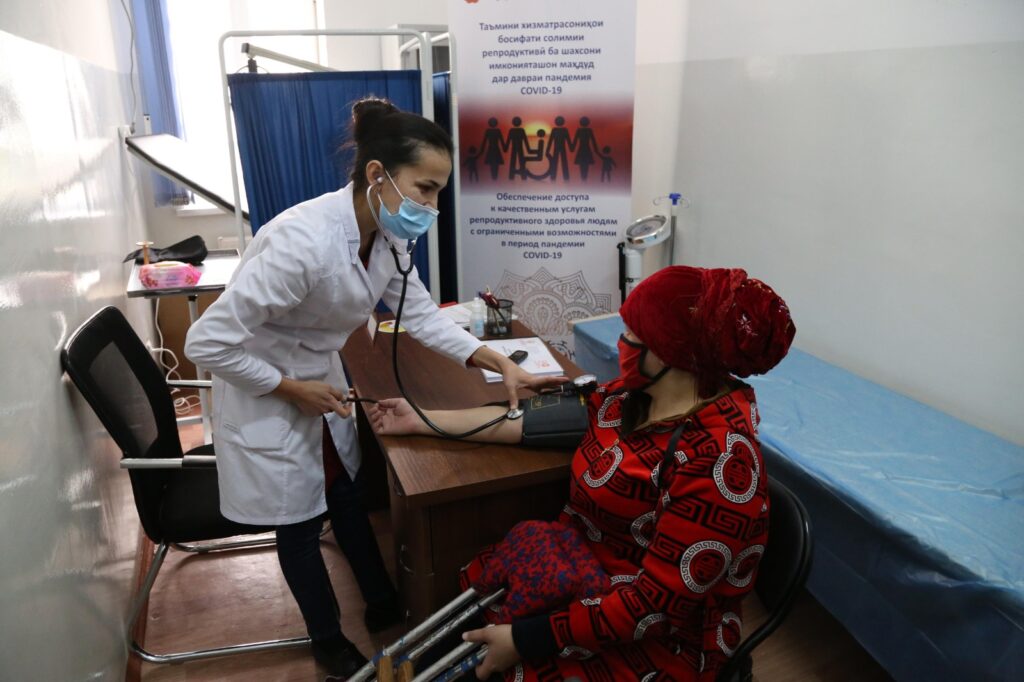
An SRHR clinic providing accessible services for women with disabilities in Rudaki District, Tajikistan.
References for the numbered endnotes
[1] The 2023 DHS reports 7% of girls aged 15–19 ever pregnant, 32% contraceptive use, 28% modern-method use, 54% of family-planning demand satisfied by modern methods, 62% receiving four or more antenatal visits, 95% facility deliveries, 98% skilled attendance and 48% of women ever tested for HIV and receiving the result.
[2] Recent UNFPA analysis identifies inadequate SRHR education, low HIV-prevention knowledge, rural inequalities and insufficient youth-friendly reproductive health services as continuing concerns.
[3] WHO’s Global Abortion Policies Database confirms the legal availability of abortion under Tajikistan’s health legislation, while also noting gaps in publicly accessible information on detailed regulations.
[4] DHS data record 16% lifetime intimate partner violence among women who have had a partner and 12% lifetime physical or sexual violence among women aged 15–49. Civil society submissions to CEDAW have highlighted inadequate survivor services and legal protection.
[5] UNAIDS estimates approximately 14,000 people living with HIV in 2024. Its analysis documents the gendered effects of Article 125 and the 2023 Supreme Court resolution concerning HIV exposure and transmission.
[6] The final DHS includes cervical cancer screening data showing very low coverage, while WHO recommends screening 70% of women with a high-performance test by ages 35 and 45 as part of the global elimination strategy.